
How to Compress a JPG Under 200 KB Without Losing Clarity
A step-by-step technical guide on reducing JPEG file size below 200 KB, 100 KB, or 50 KB while keeping text readable and photos sharp.
A step-by-step technical guide on reducing JPEG file size below 200 KB, 100 KB, or 50 KB while keeping text readable and photos sharp.
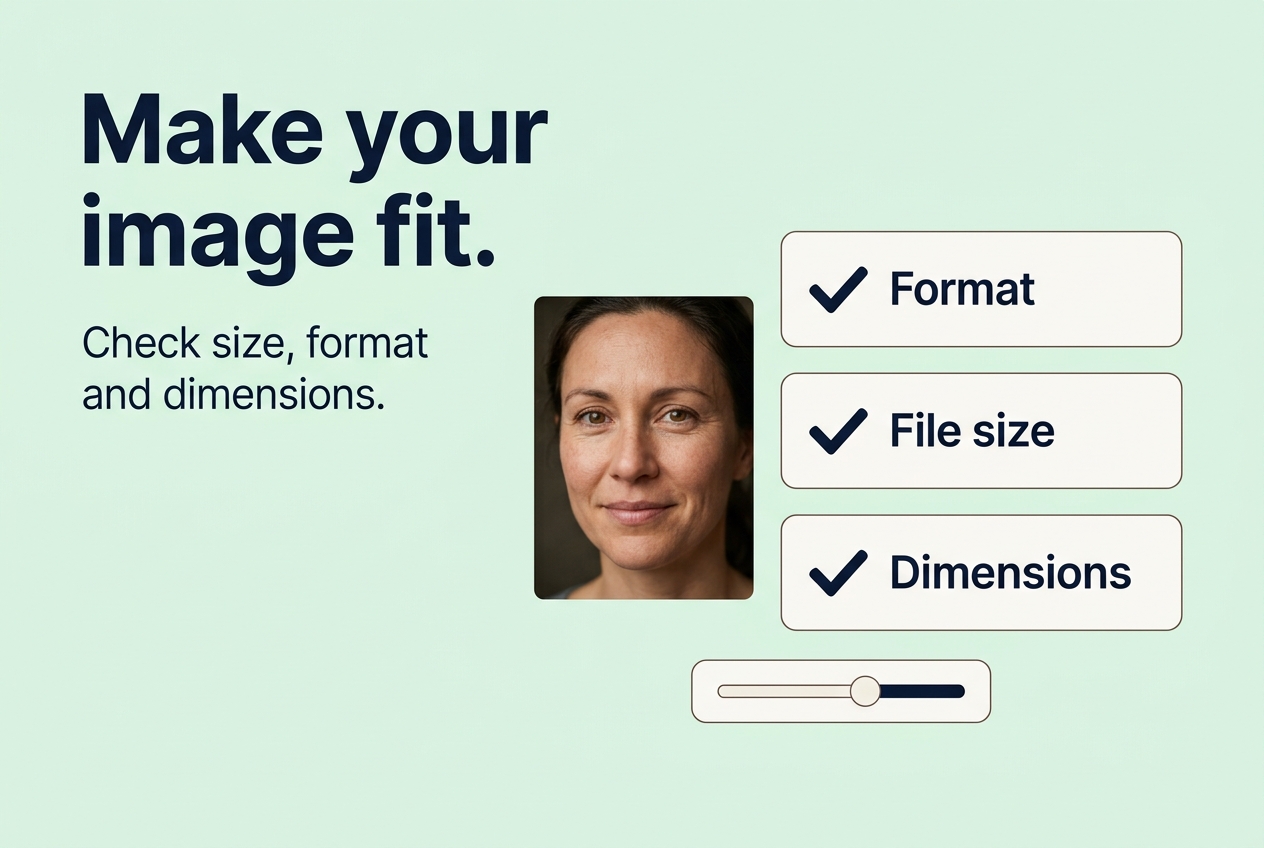
How to Compress a JPG Under 200 KB Without Losing Clarity
Direct Answer: To compress a JPEG image below a strict ceiling (such as 200 KB, 100 KB, or 50 KB) without noticeable pixelation, you must balance downscaling dimensions proportionally alongside quantization compression. Blindly dropping the JPEG quality slider to 10% causes ugly compression blocking artifacts; reducing dimensions to 1600 px or 1200 px allows you to keep the quality slider at an attractive 80%.
Understanding KB (1,000 Bytes) vs KiB (1,024 Bytes)
Different portals measure size using different base conventions:
- Decimal Kilobytes (KB): $1\text{ KB} = 1,000\text{ bytes}$. (Used by modern macOS, mobile OS, and storage standards).
- Binary Kibibytes (KiB): $1\text{ KiB} = 1,024\text{ bytes}$. (Used by Windows and legacy server validation scripts).
If an application form requires "Under 200 KB", an image of 202,000 bytes will fail on a decimal portal even if Windows Explorer reports it as "197 KB". In our Upload Requirements Checker, you can toggle explicitly between KB, KiB, and MB to ensure compliance.
Step-by-Step Optimization Workflow
- Open the Upload Requirements Checker.
- Upload your JPEG file.
- Set Maximum file size: 200 KB.
- If your image is from a 48 MP smartphone, set Dimensions limit: Max 1920 × 1080 px.
- Click Prepare & optimize. Our engine performs binary-search quality targeting to produce the crispest possible file strictly under 200,000 bytes.
- Download your verified output file.
Last updated: July 2026
This guide is reviewed by the BIC Editorial Team to keep the recommendations accurate, private, and practical for browser-based image workflows.
About the Author
Abhay Tabbay is a web developer and image optimization specialist focused on privacy-first browser tools that help people convert, resize, and optimize images without uploading files to the cloud.
Related Articles
Try the Tool
Need this workflow right now? Open our free in-browser image tools and process files locally.
Open Browser Image Converter Tools